

Udall Center Fellows Program
Since its launch in 1990, the Udall Center has hosted 184 University of Arizona faculty fellows. These scholars have represented 51 schools, departments and centers in 13 colleges (jump to list below).
From the start, the purpose of the program has been to encourage high-quality scholarly work on aspects of public policy. The number of disciplines represented reveals the breadth of public-policy work on campus. From the arts to astronomy. Sociology to hydrology. Law to public health. Psychology to mathematics. Faculty from all these fields—and more—have participated.
If selected as a UC Fellow, you will receive time in the Summer 2026, Fall 2026, or Spring 2027 term to devote to a research project related to, tangential to, or informing some area of public policy relevant to your area of academic expertise. Terms vary by fellowship track.
For 2026-27 we have partnered with the University of Arizona's BIO5 Institute, the Arizona Institute for Resilience (AIR), the College of Social and Behavioral Sciences (SBS), the Office of Research and Partnerships (ORP), the College of Agriculture, Life and Environmental Sciences(CALES) and the Office and Research Institute of the Chief AI Officer (CAIO) to offer specialized tracks for research involving a public policy dimension.
Learn more about our 2026-27 Udall Center Fellows Program Tracks here!
If you are interested in applying, the process is not complicated and will not take much of your time. The deadline to apply is Febuary 22, 2026.
ACCESS APPLICATION MATERIALS SUBMIT APPLICATION
For more information, please contact Carolina Pineda at carolinapineda@arizona.edu
Listen to what some former Fellows have to say about their experience:
Celeste Gonzales de Bustamante
Associate Professor, School of Journalism (2011-12)
"The Udall Center fellowship enabled me to finish a research project, publish several articles, and apply for additional funding that helped catapult my research to another level. I urge any faculty who have a research project that has a public-policy component to consider applying.”
Christopher Cokinos
Associate Professor, Department of English (2014-15)
“The fellowship was crucial to me as a nonfiction writer coming from the humanities; being able to interface with policy put me into a network. It was not only a gift of time, but a gift of other people’s intellectual skills helping me with my project.”
David J. Schmidtz
Professor, Department of Philosophy (1997-98)
“It was a pivotal moment in my career. I needed time to think. I was exposed to lines of research that I probably would not have come across if not for the interdisciplinary Udall Center environment for which I have had great respect for ever since.”
Edella Schlager
Professor, School of Government and Public Policy (1994-95 and 2005-06)
“I am really lucky because I have been a fellow twice. Both times the experience was really special. . . . The Udall Center provided me with a lot of opportunities. I got to participate in all its many different activities.”
Karl Flessa
Professor, Department of Geosciences (2002-03)
“My interests have evolved over time and I became interested in the intersection of science and policy. I had the opportunity to think about how the two were influencing each other. I learned how to speak policy.”
Connie Woodhouse
Professor, School of Geography and Development (2010-11)
“I developed a curriculum for a certificate program connecting science and decision making—an interdisciplinary program that bridged the physical and social sciences. I got really excellent feedback, which was what I really, really needed.”
Linda Lumsden
Associate Professor, School of Journalism (2015-16)
“The time enabled me to apply for grants to spend time at various archives and for a book contract—all of which I received. It’s seldom that you have the time to apply for these sorts of grants and programs and the fellowship did just that for me.”
Jeffrey Banister
“The fellowship allowed me to regroup and refocus on my dissertation research. A UA art historian and I put together a collaborative research proposal to the American Council of Learned Societies—which we got. So I was actually able to leverage the Udall Center support.”
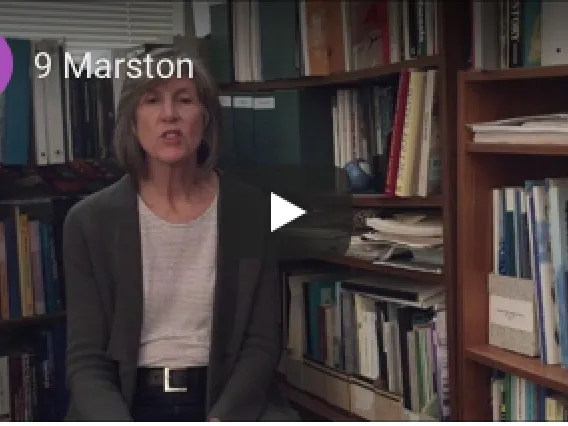
Sallie Marston
Professor, School of Geography and Development (1990-91 and 2015-16)
“I’ve been a Udall Fellow twice—once the first year of the program and again last year. Both times the experience has been fantastic; it affords you freedom—freedom from all the little things that stop you from getting any work done. . . . The first time, I produced a brand new project. The second time, I was able to write two grant proposals, one of which is still pending. I would say, ’Apply!’”
For additional information, please email Laura López-Hoffman at lauralh@arizona.edu.
ACCESS APPLICATION MATERIALS SUBMIT APPLICATION
The Udall Center Fellows Program is supported by the Office of Research and Partnerships; the College of Social and Behavioral Sciences; the BIO5 Institute; the College of Agriculture, Life and Environmental Sciences; the Arizona Institute for Resilience; the Office and Research Institute of the Chief Artificial Intelligence Officer, and the Udall Center.
Meet the 2026-2027 Udall Center Fellows

Jessica Maves Braithwaite
Associate Professor, School of Government and Public Policy, College of Social and Behavioral Sciences
Project Title: Crafting Resistance
Project Track: General Public Policy Research, in partnership with the Office of Research and Partnerships
Dissent and the ability of a people to voice opposition to state actions and policies is a central component of any democracy. But, even strongly democratic governments often take steps to limit the reach and impact of dissenting voices and ideas. And, especially in places where democracy is lacking or absent, vocal opposition to those in power can lead to imprisonment and even death.
So, what is it that motivates the mass participation that makes resistance campaigns effective, even in the face of immense risk?
Through her research on the formation and evolution of anti-government campaigns around the world, Jessica Maves Braithwaite has noticed a recurring theme that is present in most efforts to attract broader support for such movements: art.
During her UC Fellowship, Braithwaite will catalog various examples of songs, murals, posters, textile art, plays, and other forms of expression arising from anti-government campaigns around the world to tell a story about how artistic creativity can help dissidents “craft resistance.”
Braithwaite aims to create multiple publicly available resources from this project including a “set of qualitative case description notes… as well as a quantitative dataset… detailing the use of different art forms by rebel groups over time.” She also plans to develop and host a series of public lectures and community crafting activities related to the importance of art in resistance campaigns.


Alexander BuckschAssociate Professor, School of Plant Sciences, College of Agricultural, Life & Environmental SciencesSridevi KrishnanAssistant Professor, School of Nutritional Sciences and Wellness, College of Agricultural, Life & Environmental SciencesProject Title: Common beans and health in aging populationProject Track: Biosciences and Public Policy, in partnership with the BIO5 InstituteHuman beings are living longer than ever, with some researchers projecting that the average human lifespan will reach 125 by the year 2070. As the population ages, the availability of high quality sources of protein will become increasingly important. Around the world, common types of beans are an important, sustainable source of protein and iron for millions of people. However, data shows that drought can cause these crops to lose a significant amount of their nutritional content. Unless, that is, those plants “have specific root traits that help them hold onto nitrogen and iron under stress,” according to the proposal submitted by the research team of Alexander Bucksch and Sridevi Krishnan. Increasing evidence suggests that the ability for roots to hold onto critical nutrients during times of stress is a selectable trait, and yet, agricultural policies and market signals for crops are limited almost exclusively to yield size regardless of the quality of the harvest In their UC Fellowship research project supported by the BIO5 Institute, Bucksch and Krishnan will grow Pinto beans on an Arizona farm and use AI models to estimate the nutritional composition of the crops they harvest. “By identifying ‘climate-resilient, nutrient-stable’ bean types and translating them into practical foods,” the research team says, “this work can guide how breeders select new varieties, how labels and nutrient claims are set, and how public procurement, nutrition programs, and healthy-aging dietary guidelines prioritize beans that truly deliver reliable protein and iron in a changing climate.” |

Yuanyuan Kay He
Associate Professor, School of Music, College of Fine Arts
Project Title: Sonic Ecologies of the Sonoran Desert: Creative Research at the Intersection of Environmental Resilience, Sound, and Public Engagement
Project Track: Environment and Public Policy Research, in partnership with the Arizona Institute for Resilience
Composer and researcher Yuanyuan Kay He plans to journey into the Sonoran Desert in the heat of summer with an ambitious goal in mind: to translate the science and sounds of a changing landscape into something people can hear, feel, and understand.
Her project, Sonic Ecologies of the Sonoran Desert, aims to blend environmental research, sound art, and public engagement to help communities better grasp how water policy, drought, and climate pressures are reshaping life across the arid southwest.
Over six weeks, He will visit research sites managed by partners at Biosphere 2, the Sonoran Institute, the College of Science, and the UA Hydrology Department to collect environmental soundscapes and data, and then work with collaborators at the College of Information Science and the College of Fine Arts to translate that data—from hydrology models to climate projections—into musical and multimedia experiences. The goal is not just to present information, but to make complex policy decisions tangible and relatable. In this project, drought isn’t just a statistic; it becomes a rhythm, a tone, a shifting soundscape that audiences can experience firsthand.
By the end of her UC Fellowship, He expects to produce early prototypes of immersive performances and interactive installations that will be refined and expanded during the 2026–27 academic year. Those future exhibitions and community workshops will be designed to spark conversations about water governance and resilience in arid regions.
At its core, the project aims to bridge the gap between science and public understanding by using art to turn data into stories and, ultimately, to help communities imagine more sustainable futures in the desert.

Hee Jeong Kim
Assistant Professor, Department of Civil and Architectural Engineering and Mechanics, College of Engineering
Project Title: A Review of Regulatory Pathways for Circular Economy Integration in Arizona's Mining Waste and Wildfire Debris Management
Project Track: Environment and Public Policy Research, in partnership with the Arizona Institute for Resilience
U of A engineer Hee Jeong Kim, whose work engages with policy and environmental systems, is taking a close look at a problem many Arizonans rarely see but increasingly pay for: what to do with the growing volume of waste left behind by mining, wildfires, and contamination.
Her project, supported by the UC Fellows Program, examines whether Arizona policy allows for the safe reuse of some of those materials instead of sending them to landfills. The idea is rooted in the concept of a “circular economy,” where waste is treated not as an endpoint, but as a potential resource, so long as it can be managed without putting groundwater or public health at risk.
According to Kim, Arizona is a prime testing ground for this research. The state is facing more frequent wildfires and has a history of dealing with long-standing mining operations and emerging contaminants such as PFAS chemicals. In many cases, existing state laws do not outright prohibit reuse of these materials. But uncertainty about liability, monitoring requirements, and environmental safety often pushes agencies and contractors toward disposal as the default choice.
During her fellowship, Kim will analyze Arizona statutes and regulatory programs to identify where reuse is already allowed, where rules are unclear, and what evidence regulators would need to approve alternative approaches. She will also examine the long-term costs of disposal and consider engineered reuse strategies, while exploring policy tools such as procurement.
The goal of this work is to create practical guidance for state decision-makers. By clarifying the legal and economic pathways for safe material reuse, the project aims to reduce landfill burdens, protect groundwater, and help Arizona manage waste more efficiently in an era of increasing environmental pressure.

Rain Liu
Assistant Professor, Department of Communication, College of Social and Behavioral Sciences
Project Title: Shifting Norms, Eroding Trust: How Perceived AI Content Prevalence Shapes Social Media Platform Trust and Policy for Users and Creators
Project Track: AI and Public Policy, in partnership with the Office of Responsible AI
At a moment when trust in online information feels increasingly fragile, Rain Liu, a communication scholar at the University of Arizona, is turning her attention to a deceptively simple question: What happens when people start to believe that everything they see online might be generated by artificial intelligence?
During her UC Fellowship, Liu will launch a project that treats communication—not just technology—as the front line in the fight to preserve credibility in the digital age. Her work draws on years of experience helping communities change behavior through strategic messaging, from reducing plastic bag use to promoting public health during the COVID-19 pandemic. Now, she is applying that same evidence-based approach to one of today’s most pressing communication challenges: the erosion of trust in social media.
The project will begin with a nationwide survey of social media users and in-depth interviews with content creators to better understand how perceptions of AI-generated content shape trust, engagement, and livelihoods. From there, Liu plans to design and test new policy tools—such as transparency dashboards that show how much content is actually AI-generated, or platform signals that highlight verified human creators—to see whether these interventions can rebuild confidence without unintentionally fueling more skepticism.
The fellowship will support the development of policy white papers, academic publications, and stakeholder workshops that bring together researchers, policymakers, and creators to translate findings into practical guidance.
When all is said and done, this project could help social media platforms and regulators craft smarter, more human-centered policies, thereby ensuring that, as artificial intelligence becomes more common, public trust doesn’t become collateral damage.

Lise Nelson
Professor, School of Geography, Development and the Environment, College of Social and Behavioral Sciences
Project Title: Temporary H-2B visa workers and labor markets in the United States: A multi-scaled analysis
Project Track: Social Sciences and Public Policy, in partnership with the College of Social and Behavioral Sciences
For decades, the temporary worker programs that quietly power large swaths of the U.S. economy have remained largely out of public view. But as demand for seasonal labor grows and debates over immigration intensify, Lise Nelson, a professor in the School of Geography, Development and Environment, is taking a closer look at how one little-understood policy is reshaping the nation’s workforce.
During her UC Fellowship, Nelson will further develop a research project focused on the H-2B visa program, which allows U.S. employers to hire temporary foreign workers for jobs in industries such as landscaping, construction, and hospitality. Employer demand for these workers has surged in recent years, raising new questions about how businesses meet labor needs and how temporary visa programs intersect with the continued presence of undocumented workers in the same sectors.
The project will combine detailed mapping of federal labor data with on-the-ground interviews to trace where H-2B workers are being recruited, how patterns have shifted over time, and why some employers rely on the program while others do not. Initial fieldwork will focus on landscaping companies in the Phoenix region, comparing firms that use H-2B workers with those that depend on other labor sources. The research will also examine how changing immigration enforcement policies shape hiring decisions and workforce strategies.
Nelson will use her early findings to prepare major grant proposals to national foundations, laying the groundwork for a multi-year study. Ultimately, the project aims to give policymakers a clearer picture of how temporary worker programs function in practice—offering evidence that could inform future debates about immigration, labor markets, and the economic systems that rely on them.
2026-2027
Jessica Maves Braithwaite
Associate Professor, School of Government and Public Policy;
College of Social and Behavioral Sciences
Alexander Bucksch
Associate Professor, School of Plant Sciences;
College of Agricultural, Life & Environmental Sciences
Sridevi Krishnan
Assistant Professor, School of Nutritional Sciences and Wellness;
College of Agricultural, Life & Environmental Sciences
Yuanyuan Kay He
Associate Professor, School of Music;
College of Fine Arts
Hee Jeong Kim
Assistant Professor, Department of Civil and Architectural Engineering and Mechanics;
College of Engineering
Rain Liu
Assistant Professor, Department of Communication;
College of Social and Behavioral Sciences
Lise Nelson
Professor, School of Geography, Development and the Environment;
College of Social and Behavioral Sciences
2025-2026
Carolyn Barnett
Assistant Professor, School of Government and Public Policy &
School of Middle Eastern and North African Studies
Maria Porter
Assistant Professor, Department of Political Economy and Moral Science;
College of Social and Behavioral Sciences
Marcos Serafim
Assistant Professor, School of Art;
College of Fine Arts
Stacey Tecot
Professor, School of Anthropology;
College of Social and Behavioral Sciences;
Director, Laboratory for the Evolutionary Endocrinology of Primates
Adriana Zuniga-Teran
Associate Professor, School of Geography, Development and Environment;
College of Social & Behavioral Sciences
2024-2025
Leslie Farland
Associate Professor, Epidemiology and Biostatistics;
Mel & Enid Zuckerman College of Public Health
Jason Jurjevich
Assistant Professor, School of Geography, Development & Environment;
College of Social & Behavioral Sciences
Jessica Rainbow
Associate Professor, Advanced Nursing Practice and Science Division;
College of Nursing
Robin Reineke
Assistant Professor, Anthropology, Southwest Center;
College of Social & Behavioral Sciences
Elaine Romero
Associate Professor, School of Theatre, Film & Television;
College of Fine Arts
Lisanne Skyler
Professor, School of Theatre, Film & Television;
College of Fine Arts
2023-2024
Susan Brewer-Osorio
Assistant Professor, Latin American Studies;
School of Government and Public Policy
Leah Durán
Associate Professor, Teaching, Learning & Sociocultural Studies;
College of Education
Linda Green
Professor, Anthropology;
School of Anthropology
Chris Impey
Distinguished Professor of Astronomy & Astronomer, Steward Observatory;
Department of Astronomy and Steward Observatory
Yuri Makino
Associate Professor, Associate Director of School of Theatre, Film and Television;
School of Theatre, Film & Television
Michael Mulcahy
Associate Professor, Film and Television Program;
School of Theatre, Film & Television
Jennifer Roth-Gordon
Associate Professor, Anthropology;
School of Anthropology
Beth Tellman
Assistant Professor;
School of Geography, Development & Environment
2022-2023
Jonathan Bean
School of Architecture
Jamie Edgin
Department of Psychology
(now at Virginia Tech)
David Pietz
Department of History
Sergio Puig
James E. Rogers College of Law
2021-2022
Jennifer Earl
School of Sociology
(now at University of Delaware)
Mark Kear
School of Geography, Development and Environment
Orhon Myadar
School of Geography, Development and Environment
(now at University of Hawai'i at Mānoa)
Ricardo Valerdi
Department of Systems & Industrial Engineering
2020-2021
Elizabeth Baldwin
School of Government and Public Policy
Greg Barron-Gafford
School of Geography, Development and Environment
Rochelle "Shelley" Rodrigo
Department of English
Louise Roth
School of Sociology
Thomas Sheridan
Southwest Center and
School of Anthropology
2019-2020
Laura Bakkensen
School of Government and Public Policy
Megan Carney
School of Anthropology
George Frisvold
Department of Agricultural & Resource Economics
Jeffrey Kucik
School of Government and Public Policy
2018-2019
Corey Abramson
School of Sociology
Kevin Anchukaitis
School of Geography, Development and Environment
Melanie Hingle
Department of Nutritional Sciences
Christopher Weber
School of Government and Public Policy
2017-2018
Brian Mayer
School of Sociology
Susan Swanberg
School of Journalism
Melissa Tatum
James E. Rogers College of Law
Valerie Trouet
Laboratory of Tree-Ring Research
2016-2017
Doaqin Tong
School of Geography, Development and Environment
(now at Arizona State University)
2015–2016
Alex Cronin
Department of Physics
Linda Lumsden
School of Journalism
Sallie Marston
School of Geography, Development and Environment
(Retired)
2014–2015
Christopher Cokinos
Department of English
Sapana Doshi
School of Geography, Development and Environment
Don Falk
School of Natural Resources and the Environment
Tracey Osborne
School of Geography, Development and Environment
2013-2014
Jeffrey Banister
Southwest Center and
School of Geography, Development and Environment
Patrisia Gonzales
Mexican American Studies Program
Jay Hmielowski
Department of Communication
(now at Washington State University)
Jeannine Relly
School of Journalism
2012–2013
Kevin Kemper
School of Journalism
(now at Univ. of Oklahoma)
Christopher Scott
Maurice K. Goddard Chair of Forestry and Environmental Conservation
Penn State University
Susan Shaw
School of Anthropology
2011–2012
Carl Bauer
School of Geography, Development and Environment
Celeste Gonzales de Bustamante
School of Journalism
(now at University of Texas, Austin)
Julia Cole
Environmental/Climate Scientist Professor
University of Michigan
Don Grant
Department of Sociology
(now at the University of Colorado Boulder)
2010–2011
Benedict Colombi
American Indian Studies Program
Sandy Dall'erba
School of Geography, Development and Environment
(now at the University of Illinois Urbana-Champaign)
Connie Woodhouse
School of Geography, Development and Environment
(Retired)
2009–2010
Keiron Bailey
College of Education
Anna Bremen
Department of Economics
(now at Swedbank)
Ronald Breiger
Department of Sociology (now School of Sociology)
David Cuillier
School of Journalism
Joshua Guetzkow
Department of Sociology
(now at the Hebrew University of Jerusalem)
Gary Paul Nabhan
Southwest Center
2008–2009
David Breshears
School of Natural Resources and the Environment and
Department of Ecology and Evolutionary Biology
(retired)
Kraig Beyerlein
Sociology
(now at Univ. of Notre Dame)
Terry Daniel
Department of Psychology and
School of Natural Resources and the Environment
(retired)
Reid Fontaine
Psychology, Policy, and Law
(now at Duke Univ.)
2007–2008
Mimi Nichter
Department of Anthropology
Mary Poulton
Mining and Biological Engineering
Jeffrey Sallaz
Department of Sociology (now School of Sociology)
Marcela Vásquez-León
Bureau of Applied Research in Anthropology | Latin American Studies
2006–2007
Thomas Christiano
Department of Philosophy
Don Grant
Department of Sociology
(now at the University of Colorado Boulder)
Dale Kunkel
Department of Communication
(retired)
V. Spike Peterson
Political Science
(Retired)
Margaret Wilder
Center for Latin American Studies and
Department of Geography and Regional Development (now School of Geography, Development and Environment)
2005–2006
Kristin Kanthak
Political Science
(now at Univ. of Pittsburgh)
Lane Kentworthy
Sociology (now School of Sociology)
William McCallum
Mathematics
Edella Schlager
Public Administration and Policy (now School of Government and Public Policy)
2004–2005
Connie Beck
Psychology
Joseph Galaskiewicz
Department of Sociology (now School of Sociology)
John Kupfer
Department of Geography and Regional Development (now School of Geography, Development and Environment)
(now at Univ. of South Carolina)
Robert Varady
Udall Center for Studies in Public Policy
(Retired)
2003–2004
Kathy Powers
Department of Political Science
(now at Univ. of New Mexico)
Therese Markow
Department of Ecology and Evolutionary Biology and
Center for Insect Science
(now at Univ. of California-San Diego)
Beth Mitchneck
Department of Geography and Regional Development (now School of Geography, Development and Environment)
(retired)
Charles Ragin
Departments of Sociology and Political Science
(now at Univ. of California-Irvine)
2002–2003
Karl Flessa
Department of Geosciences
Linda Molm
Sociology
(retired)
Elizabeth Willott
Entomology
(deceased)
2001–2002
Linda Darling
Department of History
Suzanne Dovi
Department of Political Science
Linda Green
Department of Anthropology
J.E. de Steiguer
School of Natural and Renewable Resources
(retired)
2000–2001
Richard Eaton
History
Don Grant
Department of Sociology
(now at the University of Colorado Boulder)
H. Brint Milward
Public Administration and Policy (now School of Government and Public Policy)
(Retired)
Laura Tabili
Department of History
1999–2000
Allen Buchanan
Philosophy
(now at Duke University)
Julia Clancy-Smith
History
John Garcia
Political Science
(now at Univ. of Michigan)
Katherine Morrissey
Department of History
Charles Smith
Near East Studies
(retired)
1998–1999
Martha Conklin
Hydrology and Water Resources
(now at Univ. of California-Merced)
David Gibbs
Department of Political Science
(now in Department of History)
Alice Schlegel
Anthropology
(retired)
W. James Shuttleworth
Hydrology and Water Resources
(deceased)
David Wilkins
Political Science
(now at Univ. of Minnesota)
1997–1998
Susan L. Craddock
Women's Studies & Geography
(now at Univ. of Minnesota)
Jennifer L. Croissant
Culture, Science, Technology and Society
(now in Gender and Womens Studies)
Kevin E. Lansey
Civil Engineering
Calvin Morrill
Sociology
(now at Univ. Of California-Berkeley)
Keith G. Provan
Public Administration & Policy
(deceased)
Michael L. Rosenzweig
Ecology and Evolutionary Biology
(retired)
David J. Schmidtz
Department of Philosophy
1996–1997
Karen Anderson
History
(retired)
Elisabeth Clemens
Sociology
(now at Univ. of Chicago)
Andrew Comrie
Geography and Regional Development (now School of Geography, Development and Environment)
Alvin Goldman
Philosophy
(now at Rutgers Univ.)
Lisa Graumlich
Laboratory of Tree-Ring Research and
Institute for the Study of Planet Earth
(now at Univ. of Washington)
Ken Koput
Management and Policy
(deceased)
Larry Leslie
Higher Education
(retired)
Thomas Maddock III
Hydrology and Water Resources
(retired)
Thomas McGuire
Bureau of Applied Research in Anthropology
(retired)
Gordon Mulligan
Geography and Regional Development (now School of Geography, Development and Environment)
(deceased)
Walter Powell
Sociology
(now at Stanford Univ.)
Thomas Sheridan
Arizona State Museum
(now at UA School of Anthropology and Southwest Center)
Benjamin Wilfond
Pediatrics
(now at Univ. of Washington)
1995–1996
Roger Bales
Hydrology and Water Resources
(now at Univ. of California-Merced)
Adele Barker
Humanities
(retired)
Albert Bergesen
Department of Sociology (now School of Sociology)
Lucien Duckstein
Systems and Industrial Engineering
(deceased)
Leslie Eldenburg
Accounting
(retired)
Roger Fox
Agricultural and Resources Economics
(retired)
Barbara Gutek
Management and Policy
(retired)
Laura McCloskey
Psychology
(now at Indiana Univ.)
Ronald Oaxaca
Department of Economics
(retired)
Gary Rhoades
Higher Education (now Dept. of Education Policy Studies and Practice)
1994–1995
Victor Baker
Geosciences
Dennis Cory
Agricultural and Resource Economics
(retired)
Janet Jakobsen
Women's Studies
(now at Barnard College)
Douglas McAdam
Sociology
(now at Stanford Univ.)
Amnon Rapoport
Management and Policy
(deceased)
Edella Schlager
Public Administration and Policy (now School of Government and Public Policy)
John Schwarz
Political Science
(retired)
Sheila Slaughter
Higher Education
(now at Univ. of Georgia)
1993–1994
Susan Gonzalez Baker
Public Administration and Policy
(deceased)
Thomas Christiano
Department of Philosophy
Deborah Mathieu
Political Science
(retired)
Susan Philips
Anthropology
(retired)
David Snow
Sociology
(now at Univ. of California-Irvine)
Soroosh Sorooshian
Hydrology and Water Resources
(now at Univ. of California-Irvine)
Thomas Weaver
Anthropology
(retired)
1992–1993
Chris Demchak
Public Administration and Policy
(now at U.S. Naval War College)
Tamra Pearson d'Estrée
Psychology
(now at Univ. of Denver)
Michael Hechter
Sociology
(now at Arizona State Univ.)
Keith Lehrer
Department of Philosophy
(retired)
Roger Nichols
History
(retired)
Lynn Smith-Lovin
Sociology
(now at Duke Univ.)
Douglas Weiner
Department of History
Ervin Zube
Renewable Natural Resources
(deceased)
1991–1992
Allen Buchanan
Philosophy
(now at Duke Univ.)
Bonnie Colby
Department of Agricultural and Resource Economics
Paula England
Sociology
(now at New York Univ.)
Debra Friedman
Sociology
(deceased)
Roger Henderson
Law
(retired)
Bernard Herber
Economics
(deceased)
Bernard Jaworski
Marketing
(now at Drucker School of Management)
Bruce Sales
Psychology
(now at Indiana Univ.)
Michael Schaller
Department of History
1990–1991
Lawton Burns
Management and Policy
(now at Wharton)
James Cox
Economics
(now at Georgia State Univ.)
Andrew Kirby
Geography and Regional Development (now School of Geography, Development and Environment)
(now at Arizona State Univ.)
Sallie Marston
Department of Geography and Regional Development (now School of Geography, Development and Environment)